
Dust and Frames
Where my cycling and cinematic imaginaries melt together, almost nowhere like around Siena

I like to think that the fact road cycling is, by far, the sport that interests me most has something to do with an affinity with cinema and, by extension, with other narrative and visual disciplines. It may sound like a whimsical association, but there are fairly concrete reasons behind it. Developing them exhaustively, with the kind of rigor that might convince skeptics, is not the central purpose of this text, though a few notes can be sketched out.
Road cycling does not take place inside an enclosed venue — a track, an arena, a stadium — but rather on the world itself. The race unfolds along open roads, crossing landscapes, villages, and cities, turning the territory into an inseparable part of the sporting narrative. Added to this is another essential feature: movement. The riders, the race itself, and the entire caravan that accompanies it advance continuously, almost always in line, as if the whole event were one extraordinarily long tracking shot, a travelling that stretches for hours. Even when a race is contested on a circuit, these loops usually span several kilometers — enough to preserve that sense of constant displacement.
All of this offers extraordinarily rich possibilities for television direction. Even so, there is still plenty of room for innovation. Much of the audiovisual language of televised cycling has remained surprisingly static for decades — if you ask me about the small cameras mounted on a rider’s seatpost, I’ll have to say they strike me as a short-fuse gimmick; the effect and the interest wear off almost immediately. That is why, filmmakers of the world, come closer if you have new ideas about how to film this sport. But let it be clear: the real challenge is doing it live. Aestheticized recreations edited after the race can be suggestive, but they are not the central issue.
Where were we? Yes — road cycling already contains within itself many of the ingredients that make it a spectacle with enormous potential to be highly telegenic. Even more so when we take into account that the routes of many races are designed with criteria of tourist and heritage promotion in mind: natural landscapes, architecture, history. In that sense, cycling is — or could be — the most cinematic of popular sports.
But in truth, I had come here to talk about myself more than about cycling. And about the fact that things are almost never only what they appear to be. Just as objects are not merely objects but accumulate layers of meaning (symbolic, identitarian, ritual, emotional…) — and for people often function as containers of memory and imagination — for me cycling is not just cycling. It is one of the cornerstones of my visual culture, alongside cinema and, to a lesser extent, other visual disciplines. Between them, contamination happens; they intoxicate one another. When I think about a race, then, I do not think only about what happens in sporting terms: I also see all the sediment of film images — or rather the memory I retain of them — that has accumulated there over the years.
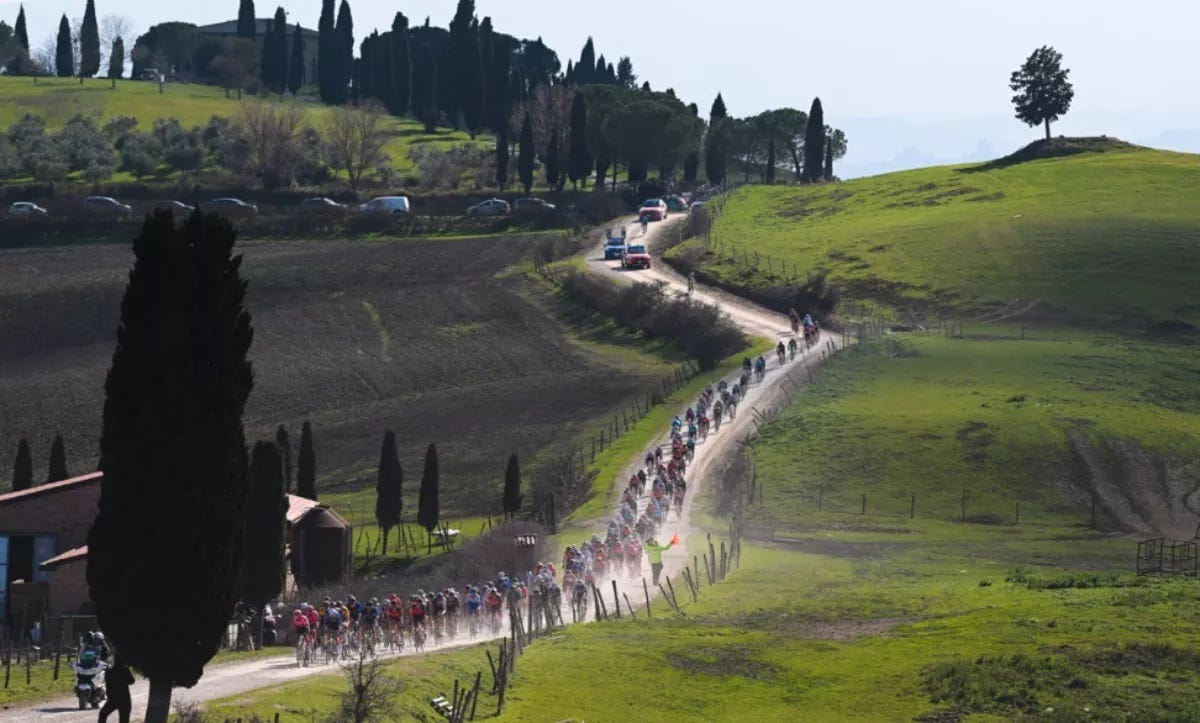
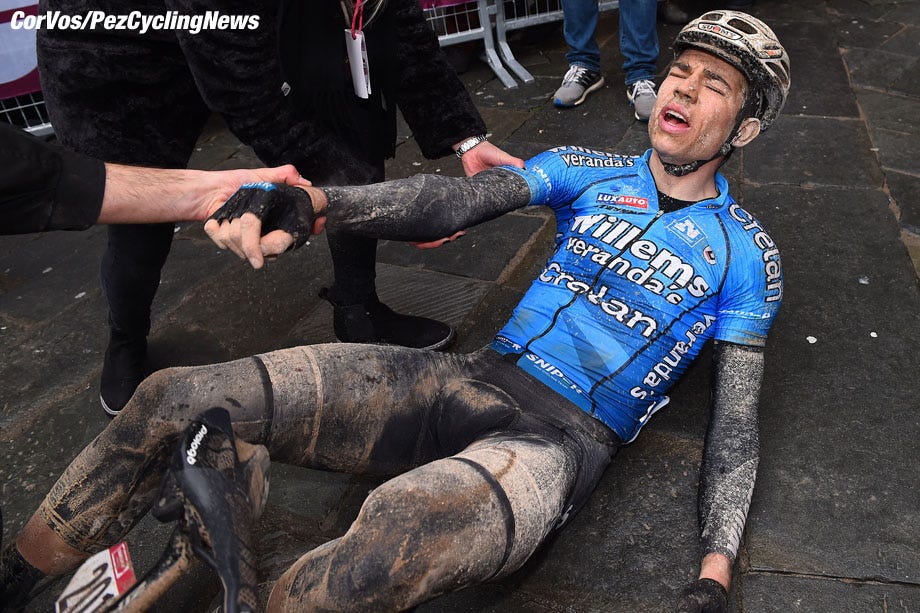
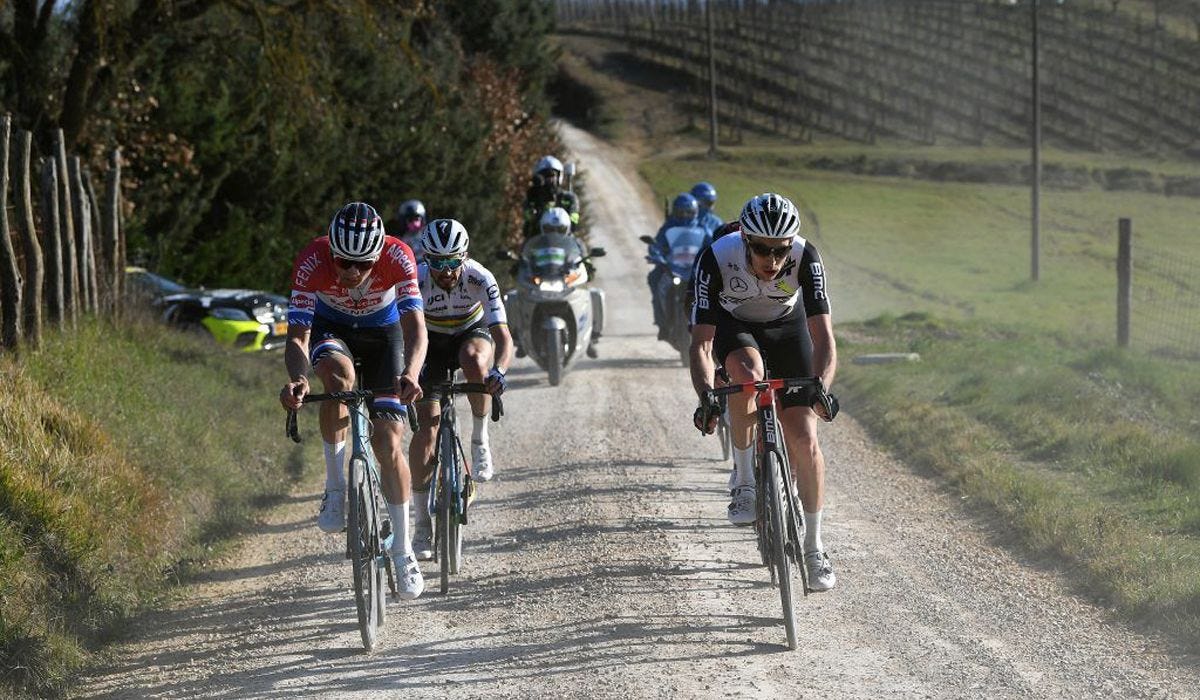
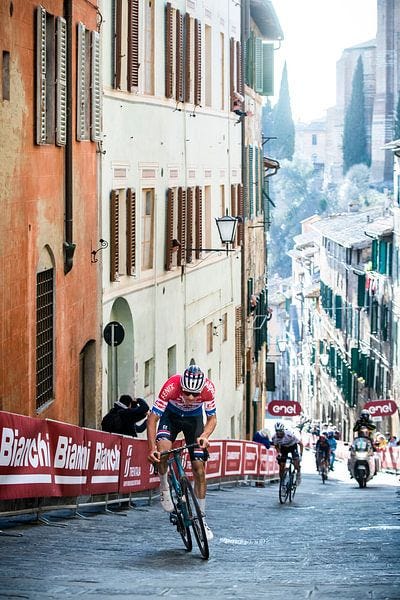
In the case of Strade Bianche, that sediment is particularly dense. When I think about it, a whole series of cycling memories overlap: Cancellara; the fleeting Moreno Moser; Stybar; Valverde discovering the race and falling in love with it, perhaps too late. I also see Benoot caked in mud; a young Van Aert, freshly arrived from cyclocross, cramping on Via Santa Caterina; the unusual presence of Gogl among a super-elite group during the 2021 edition; the nervous electricity of Pidcock; or Alaphilippe flying over the handlebars…
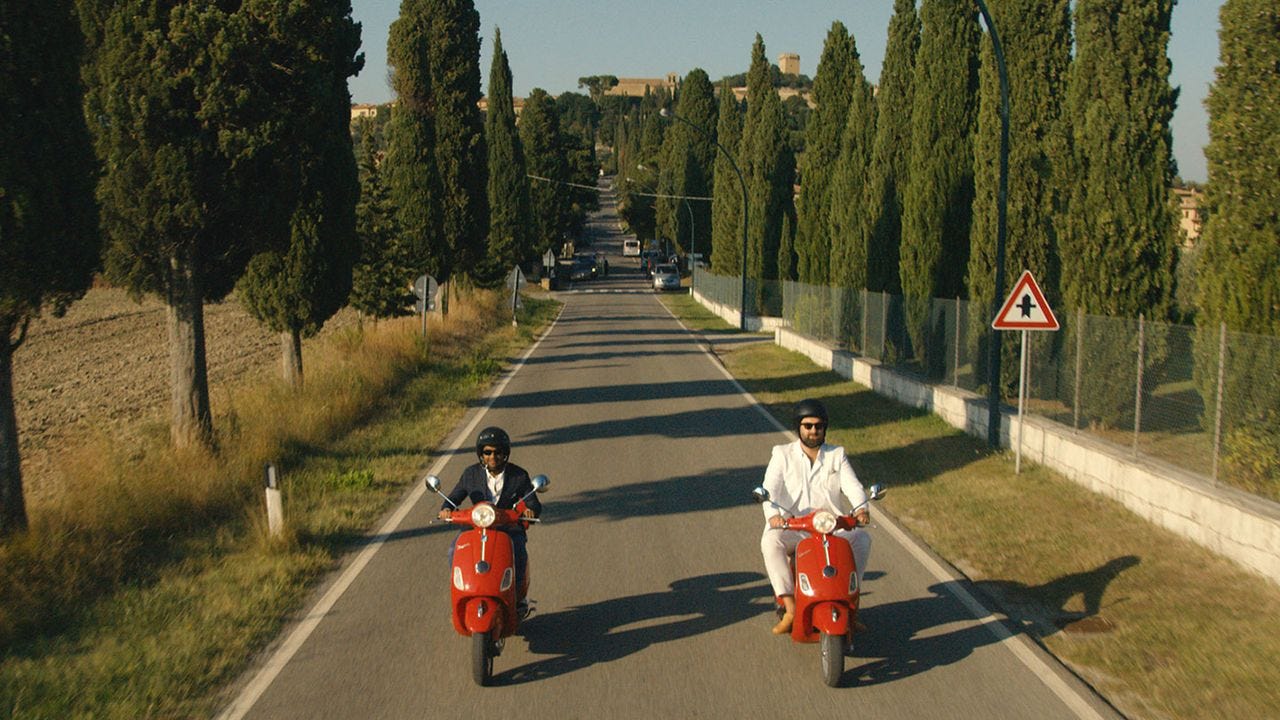
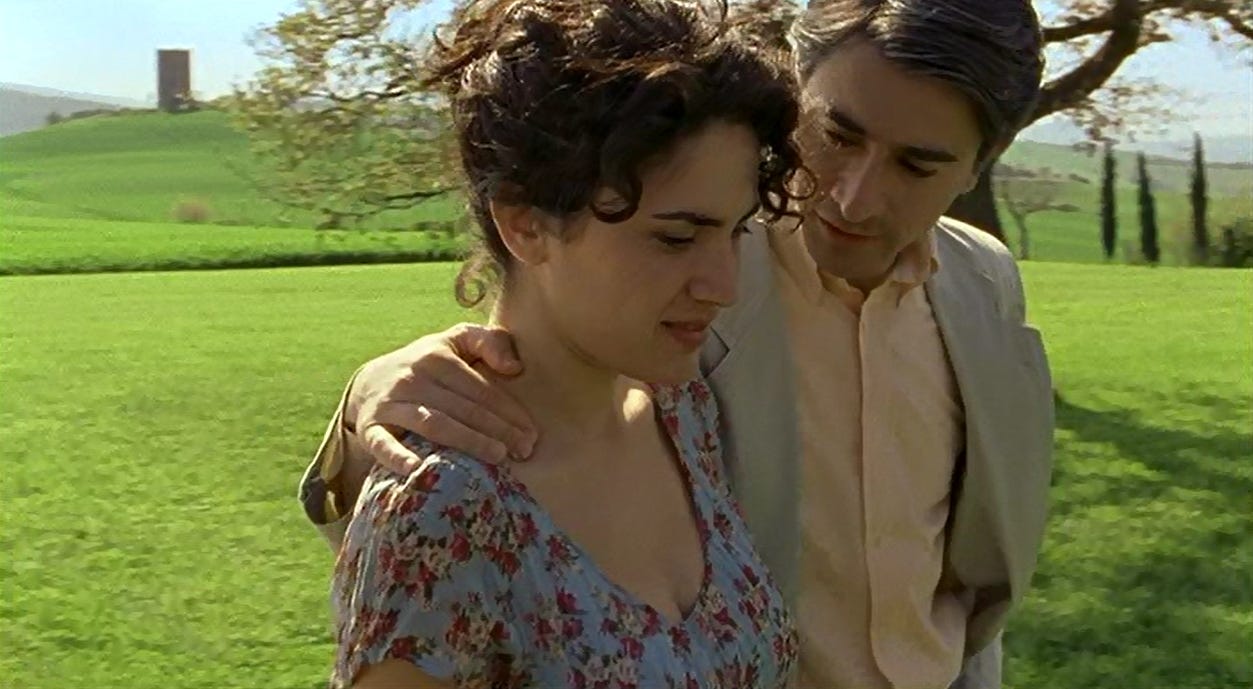
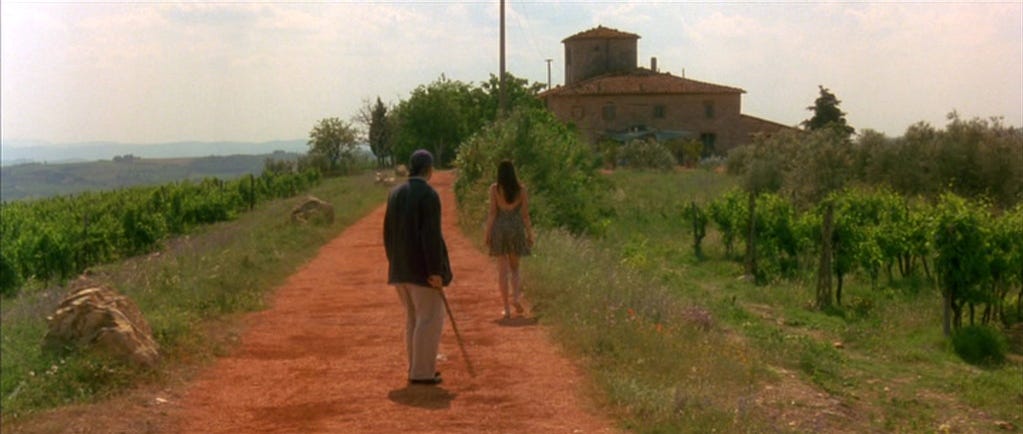
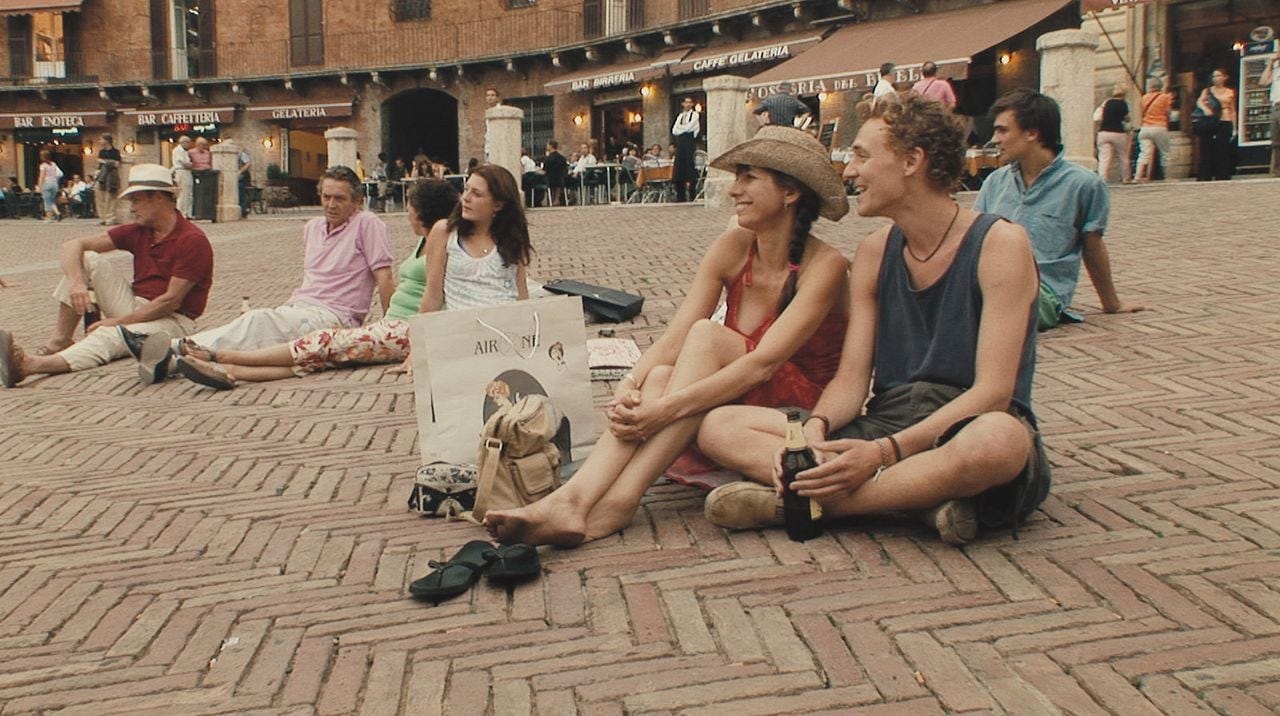
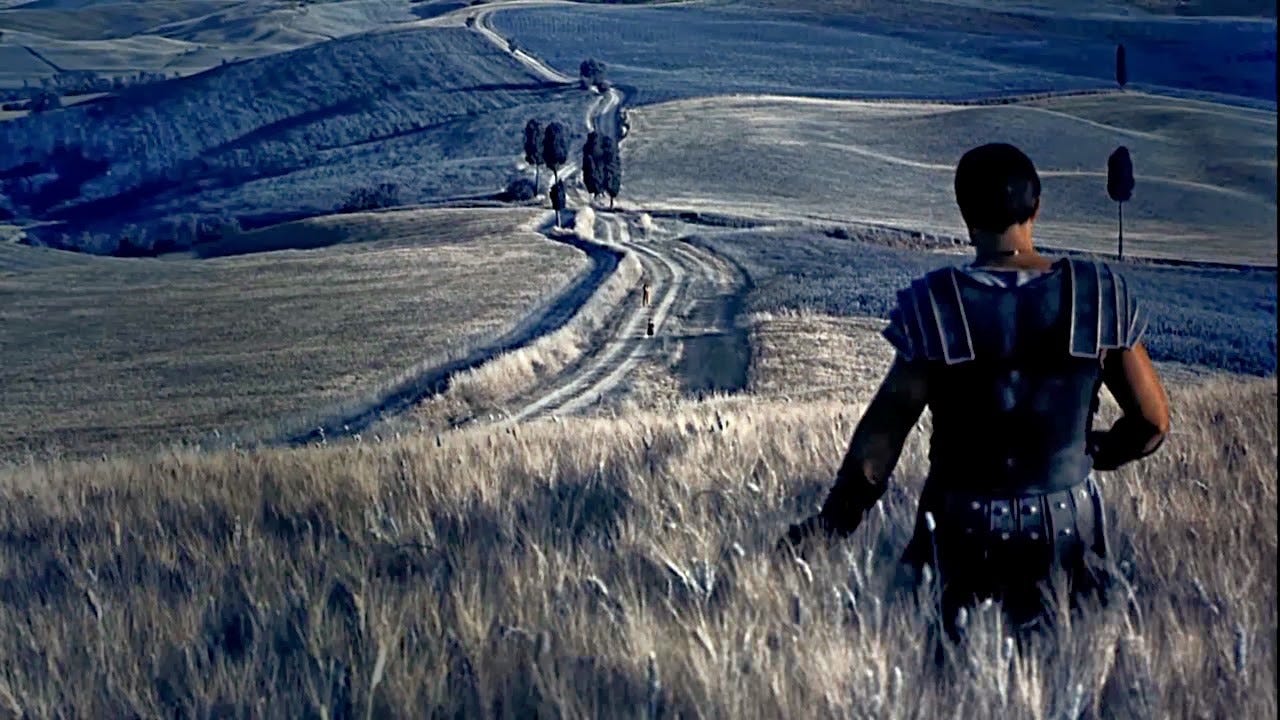
But Strade Bianche also contains — and with particular generosity — that other visual and cinematic imaginary associated with Tuscany, Siena, the light and the dust of those white roads. I see all of it at once: a torrent of images from films I love… and others I do not love quite so much. The imagination only discriminates what pleases us up to a point; nor does it exercise strict geographic rigor, and it can absorb images that do not belong exactly to that physical territory.
With this double obsession of mine — cycling and cinema — today’s piece, on the eve of this Saturday’s Strade Bianche, would work better as a Tumblr, an Instagram carroussel, a Pinterest folder, or a notebook with photographs glued onto its pages than as an article. Too much text, damn it — all this is preamble and context. This should really be a small film essay, an accumulation of frames that, through superimposition, configure my imaginary of Siena and Tuscany.
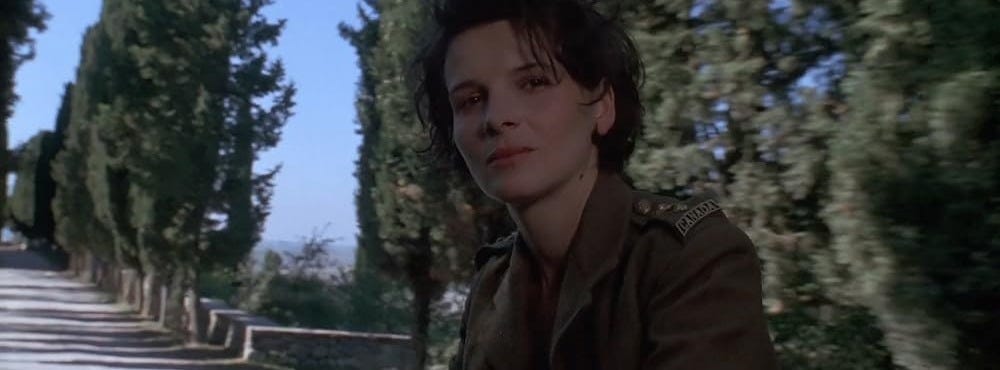
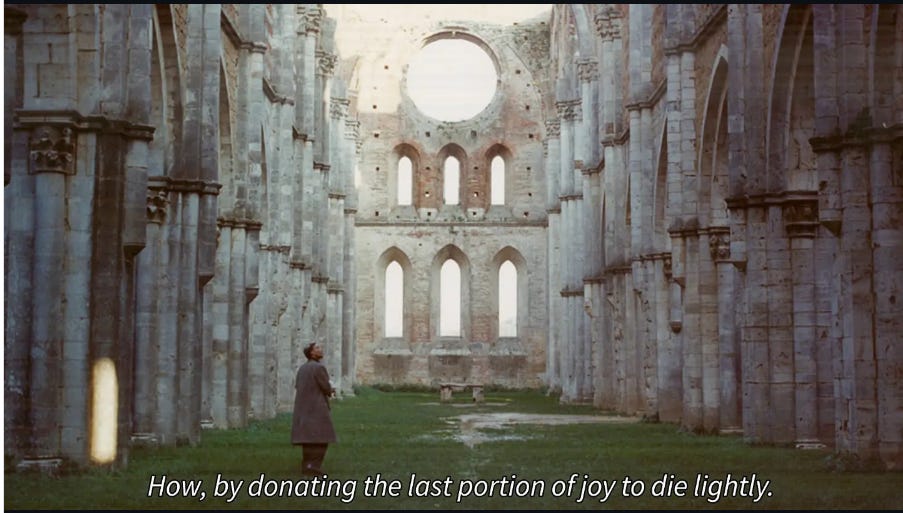
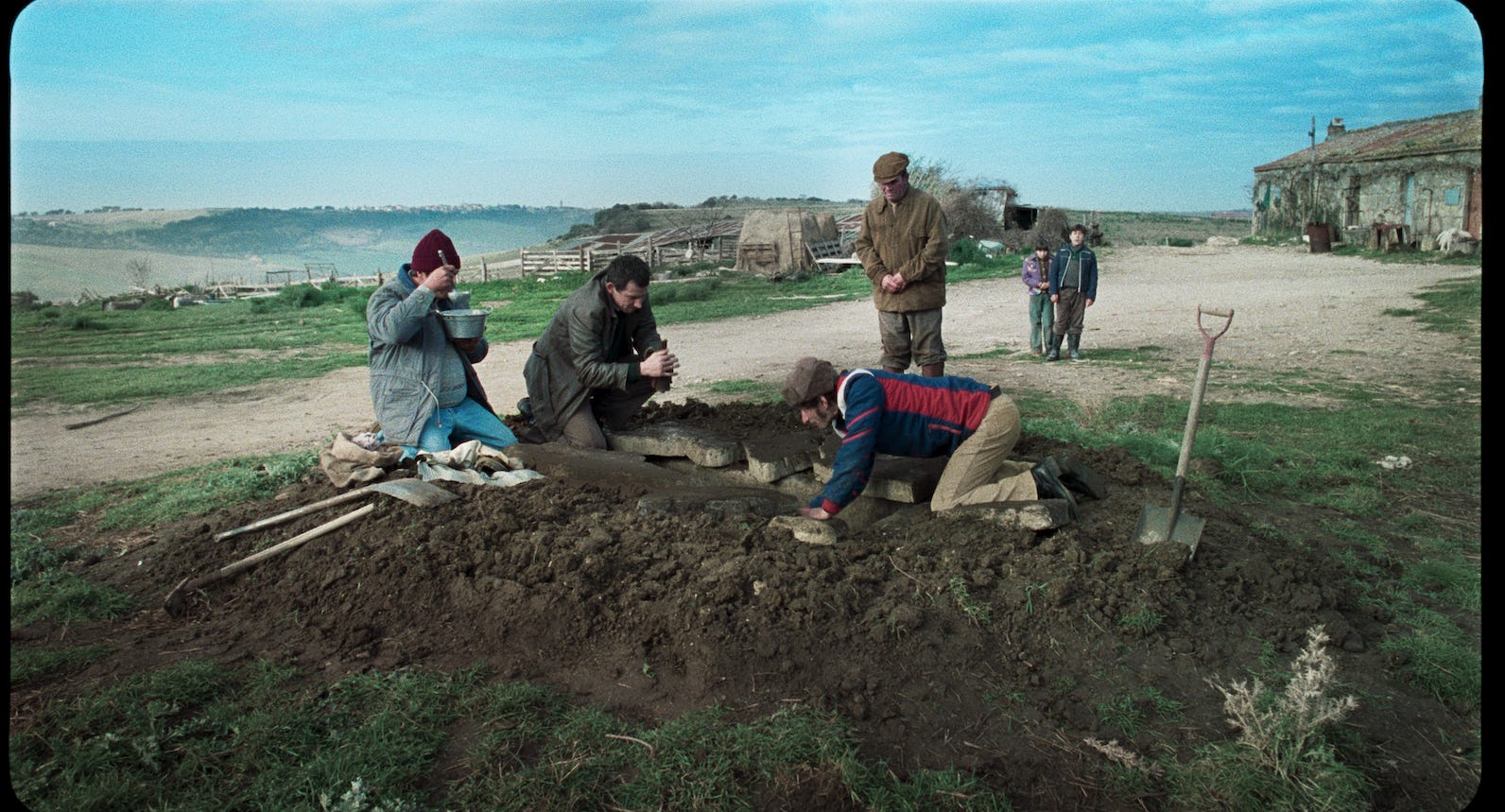
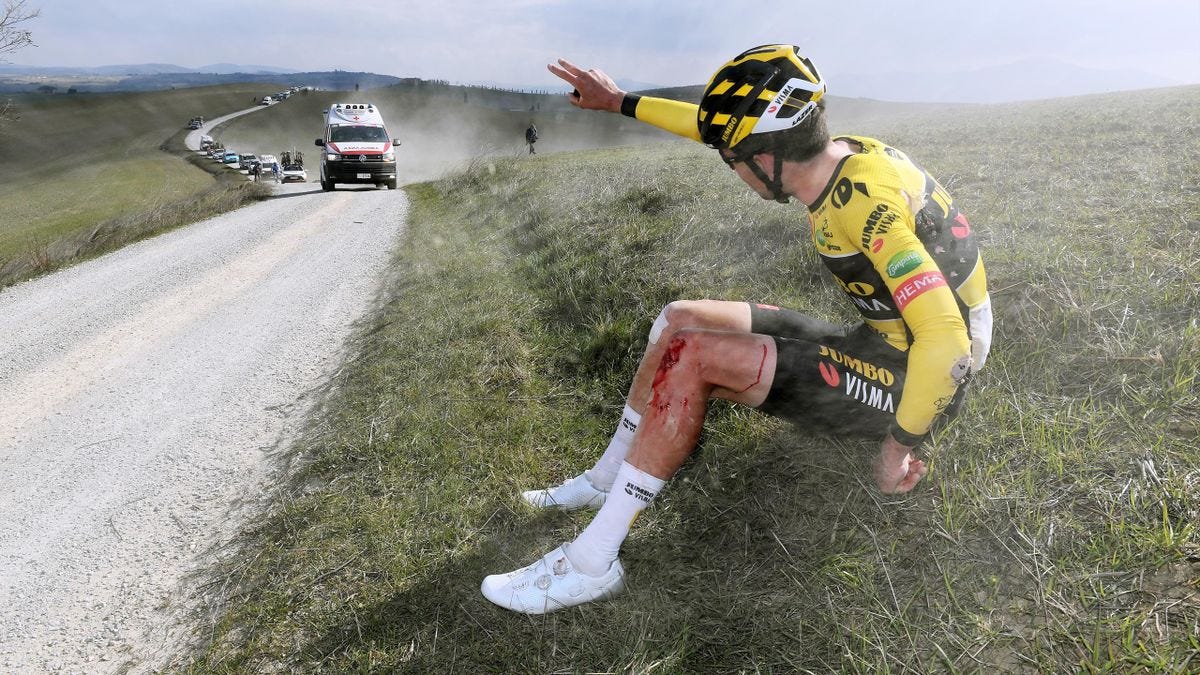
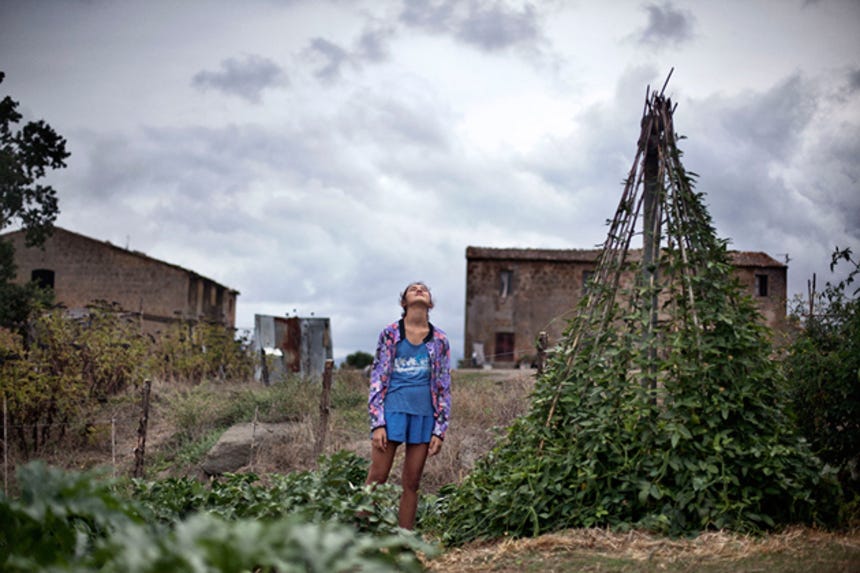
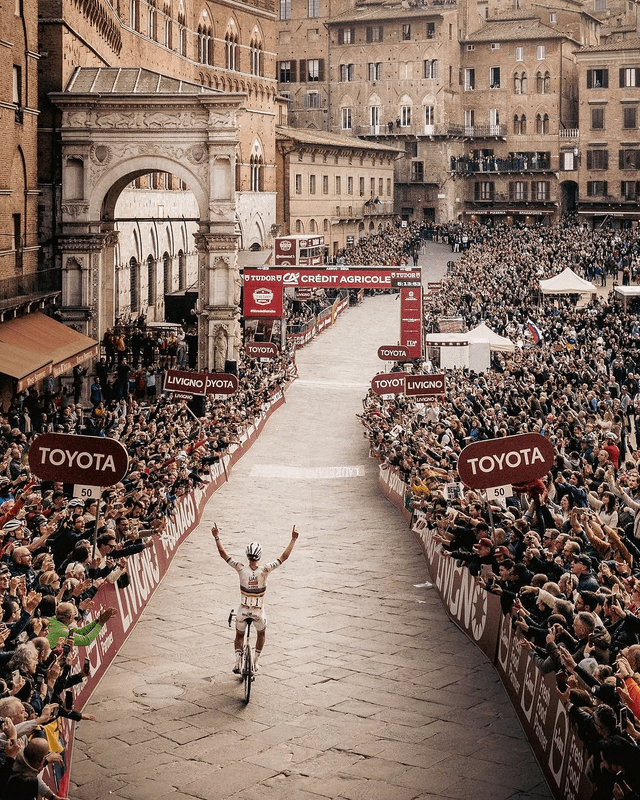
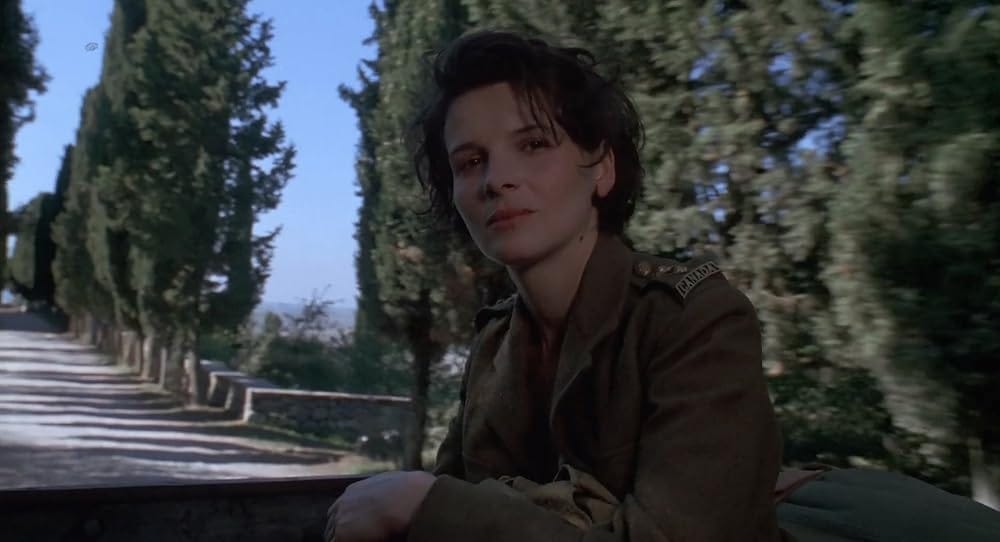
At the very least, here is a small sample of that torrent of images.
Thanks for reading El diable als turons! Subscribe for free to receive new posts and support my work.